
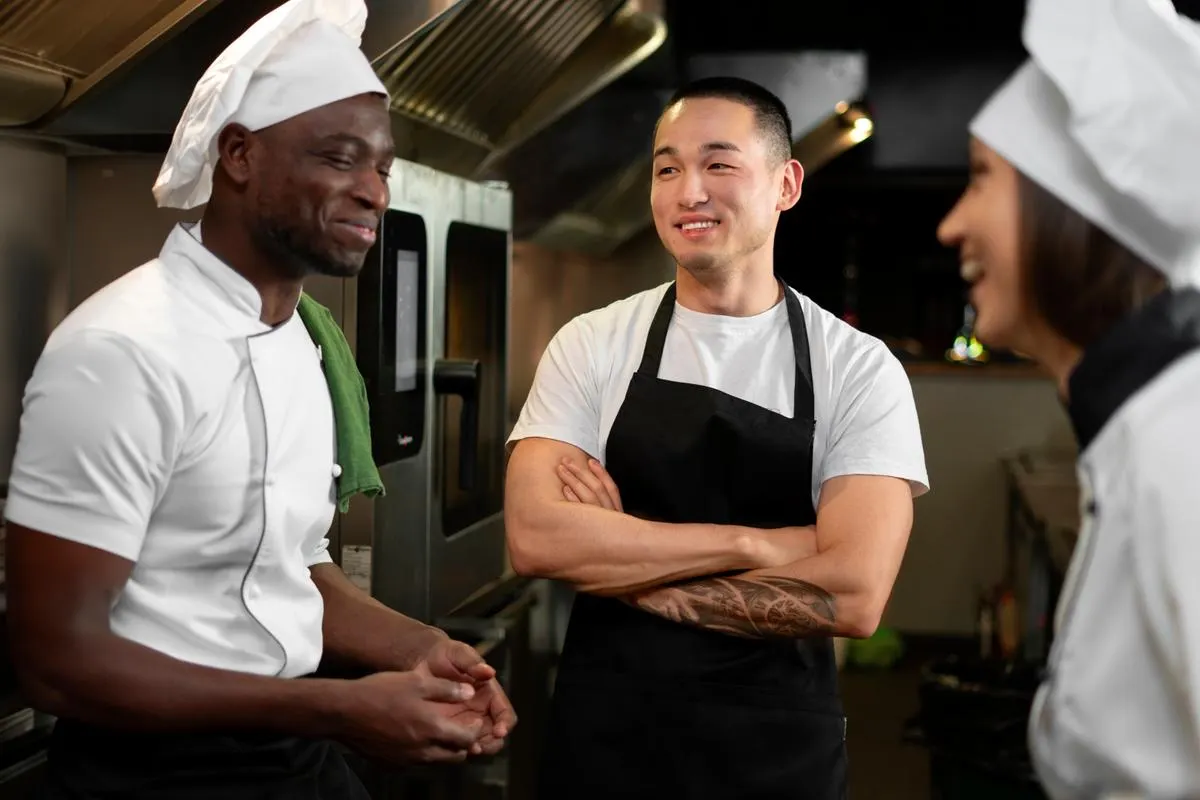
Delícias & Eventos (real case — data altered under NDA), a catering company in Porto with 15 employees and an industrial kitchen capable of 500 meals per day, faced a frustrating paradox: it received more than 60 quote requests per month but only managed to convert 12. The problem was neither the quality of the food nor the prices — it was the slowness. Each quote took, on average, 2 working days to prepare, and by then the client had already received proposals from 3 competitors. The founder, Carla Nunes, was literally losing business because she could not respond in time.
The Diagnosis: An Impossible Quoting Process
To understand why each quote took 2 days, we mapped the entire process. The request arrived by email or website form with vague information ("I want catering for 80 people at a wedding in July"). Carla or her assistant replied with additional questions: type of service (buffet, plated, cocktail), desired menu, allergies, equipment needed, event venue. Often, 3 to 4 back-and-forth emails were necessary before having enough information to produce a quote.
Then, Carla opened an Excel spreadsheet and manually calculated: ingredient costs (checking current supplier prices), labour costs (number of cooks and waitstaff needed for that volume), equipment and logistics costs (transport, setup, material hire), company margin, and VAT. The final document was formatted in Word with the company branding and sent by email.
The complete process consumed between 2 and 4 hours of work per quote. With 60 requests per month, that was 120 to 240 hours monthly dedicated exclusively to quoting — the equivalent of 1.5 full-time employees. And since 80% of quotes did not convert into sales, the vast majority of that work was wasted.
There was yet another invisible problem: inconsistency. Because the calculations were manual, the same event configuration could result in different prices depending on who prepared the quote and when it was done. This created embarrassing situations when clients compared quotes received by friends for similar events.
The Solution: Automated Quoting and Integrated Management
Online Quote Configurator
We developed an interactive quote configurator on the Delícias & Eventos website that allowed the client to build their event step by step and receive an instant quote. The configurator worked in five stages:
Stage 1 — Event type: The client selected from wedding, christening, corporate event, private party, conference or other. Each type pre-loaded specific suggestions and adjusted the calculation parameters.
Stage 2 — Details: Number of guests (with slider), event date, venue (with the option of the client's own venue or the company's), time and duration.
Stage 3 — Menu: The client chose from pre-defined menus (economy, classic, premium, gourmet) or built a custom menu by selecting starters, main courses, desserts and drinks from a visual catalogue with photographs and descriptions. The per-person price updated in real time with each selection.
Stage 4 — Extras: Floral decoration, DJ/music, custom cake, coffee breaks, live food stations (sushi, barbecue, crepes). Each extra had a fixed or per-person price, clearly indicated.
Stage 5 — Summary and quote: The client saw the complete event summary with total price, per-person price and breakdown by category. They could adjust any parameter and see the price update instantly. When satisfied, they submitted the request with their contact details.
The generated quote was automatically formatted as a branded PDF and sent by email to the client in under 5 minutes — including terms and conditions, cancellation policy and confirmation instructions. Carla received a notification with all the details and could manually adjust the quote if needed before the client saw it.
Losing business because your quotes take too long?
We build automated quote configurators for catering, events and B2B service companies. The client receives the proposal in minutes.
View Automated Quoting →Event Management App
When a quote was accepted, the event automatically entered an internal management platform. This platform gave the Delícias & Eventos team a complete view of each event: preparation timeline with tasks assigned to team members, aggregated ingredient list (automatically calculated from the menu and guest count), required equipment list with availability checks, team schedule with setup, service and teardown times, and client and venue contacts.
The app allowed Carla to see at a glance all events for the next 30 days, identify schedule or equipment conflicts, and plan ingredient purchasing in aggregate. If two events in the same week required 50 kg of prawns, the system automatically consolidated the order to the supplier — instead of two separate orders, which allowed negotiating better prices.
For the operational team, the app was an essential tool on the event day. Every team member knew exactly what time to arrive, what to set up, which menu to serve and who to report problems to. Communication, which previously depended on scattered phone calls and WhatsApp messages, became centralised and traceable.
Automatic Cost Control
The third component was a cost control system that Carla had never had before. Each event had a budget automatically calculated based on actual ingredient costs, labour and logistics. As purchases were recorded and work hours logged, the system calculated the real margin of the event — not the estimated margin, but the margin actually achieved.
This revealed significant surprises. Carla discovered that weddings of 100 to 150 guests were the most profitable (32% margin), while corporate events of 30 to 50 guests, which she considered the core business, had a real margin of only 18% — below what she thought. The reason: the fixed costs of logistics and minimum team were proportionally higher for small events. With this information, Carla adjusted the pricing for small events and shifted marketing focus towards weddings and larger events.
Implementation and Adoption
The complete project took 8 weeks. The quote configurator was the most complex component, requiring the definition of all menus, extras and pricing rules. Carla and her team dedicated around 20 hours to cataloguing options, defining unit prices and photographing dishes — a time investment that paid for itself hundreds of times over.
The greatest resistance came, curiously, from corporate clients who were accustomed to the in-person quoting process. The solution was to maintain both channels: clients who preferred a face-to-face meeting continued to be received by Carla, but now the quote was generated during the meeting itself using the configurator on a tablet — instead of remaining pending for the following days. The client left the meeting with the PDF quote in their email.
Results After 5 Months
• Quoting time: from 2 days (2–4 hours of work) to 5 automatic minutes or 20 minutes with manual customisation. A 95% reduction in time invested per quote.
• Conversion rate: from 20% to 38%. The speed of response was the decisive factor — clients who received the quote immediately were 3 times more likely to accept than those who waited 2 days.
• Events per month: from 12 to 23. The increase came not only from higher conversion but also from the ability to manage more events simultaneously with the management app.
• Average margin per event: from 22% to 27%. Real cost control allowed identifying and correcting margin leaks, and aggregated purchasing optimisation reduced ingredient costs by 8%.
• Operational errors: 70% reduction in problems reported during events (missing ingredients, insufficient staff, wrong equipment). The management app ensured all details were verified before the day.
• Carla's time on quotes: from 60% of her time to 15%. Carla redirected her time to commercial prospecting, new menu development and team training — activities that generated growth rather than merely maintenance.
• Projected annual revenue: from €420,000 to €690,000 — a 64% increase with the same headcount.
Lessons for B2B Service Companies
This case demonstrates a universal principle for service companies: the speed of response is as important as the quality of the proposal. In a market where clients request 3 to 5 quotes, the first to respond has a disproportionate advantage — not because the client is impatient, but because speed conveys professionalism and capability.
The quote configurator did not eliminate customisation — it amplified it. Carla now dedicates her time to customising premium proposals and creating unique experiences, instead of performing calculations in Excel for standard events. Automation did not replace expertise; it freed it for where it truly makes a difference.
Real cost control — not estimated — is transformative. Many service companies do not know how much they actually earn on each project until the end of the fiscal year, when the accountant presents the numbers. Having that information in real time allows adjusting prices, negotiating with suppliers and making strategic decisions based on data, not intuition.
Conclusion
Delícias & Eventos transformed its biggest bottleneck — quoting — into its greatest competitive advantage. While competitors take days to respond, Delícias responds in minutes. While competitors manage events in Excel spreadsheets and WhatsApp groups, Delícias has an integrated platform that ensures flawless execution. The €6,200 investment in the complete system generated a return of over €270,000 in additional revenue in the first year. But the real return was Carla's peace of mind: for the first time in 10 years, she feels she controls the business — instead of the business controlling her.